




Picture your next customer. They are on a phone, in another country, maybe on hotel or ship wifi, choosing between you and three other companies in a few minutes. This checklist is for Caribbean car rental, tour and transfer companies, and every point comes from websites we designed and built for businesses in Aruba.
Key takeaways
- Sell the island first and the vehicle second. Visitors buy the trip, not the car.
- Answer the traveller's worries before they ask: price, waiting, late flights, what is included.
- Put a real price, or a way to get one for their dates, within one tap.
- Make booking the brightest thing on every screen, and keep it to a few steps.
- Show proof a stranger can check: reviews, real photos, and a business that answers.
1. Pass the phone test
Open your website on your phone, on mobile data, and try to book something. Time it. If it takes more than a couple of minutes, or you have to zoom, or a menu hides the booking button, your guests have the same problem and most will not wait.
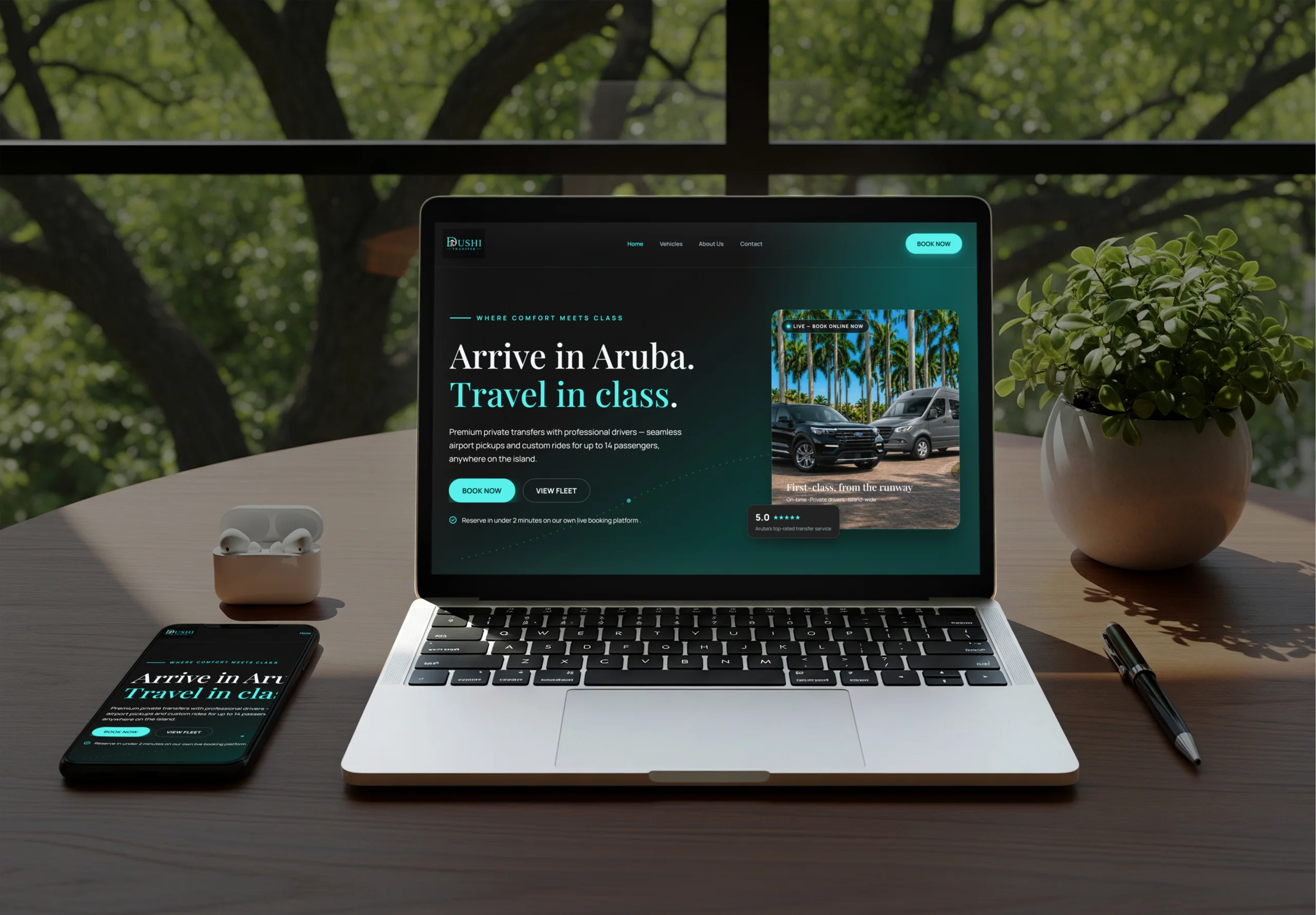
Dushi Transfers is built so a visitor can book a ride in under two minutes, because a traveller booking an airport transfer is rarely sitting at a desk. They are booking before they land, often from another country.
- Book a real trip on your own phone and time it
- Booking button visible without scrolling
- Pages load fast on mobile data
- Forms that work with a thumb
2. Sell the island, then the vehicle
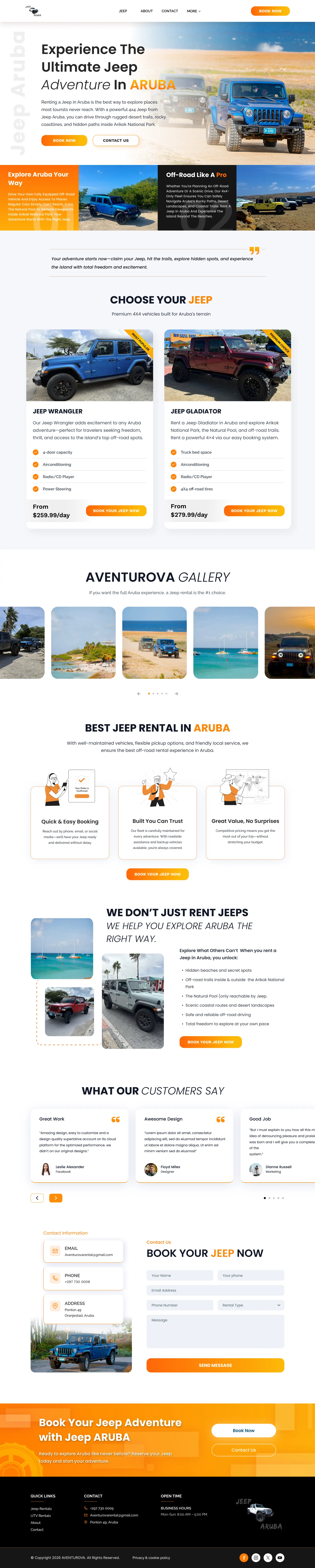
People who rent a Jeep in Aruba are not buying transport. They want Arikok National Park, the Natural Pool and the beaches a normal car cannot reach. So the Jeep Aruba site opens with the experience, then two tiles on where a Jeep takes you, then the Jeep Wrangler and the Jeep Gladiator side by side, each with its own book button.
It is one page, in the order a visitor decides: why, which one, can I trust you, book. No menu to dig through. A tour company can use the same order: the place, the trip, the proof, the booking.
Related: the Dushi Transfers website.
3. Answer the worries of someone who has not landed
A visitor booking a transfer has to trust a driver they have never met. Will someone be waiting? What if the flight is late? What does it cost, all in? Is the car big enough for the family and the luggage? Every question left unanswered sends them back to the taxi line.
Dushi Transfers answers those on the page. It runs 24/7, its largest vehicle carries up to 14 passengers, the fleet is shown with instant quotes, and three steps explain what happens from choosing a ride to the journey itself. The site is dark and quiet, with one teal accent and a serif headline, so it feels like a chauffeur service rather than a taxi app.
- Opening hours and what happens if a flight is late
- The all-in price, or how it is worked out
- Vehicle size, seats and luggage
- Where pickup happens: airport, port, hotel
- How to reach a real person, including WhatsApp
4. Show a price you will honour
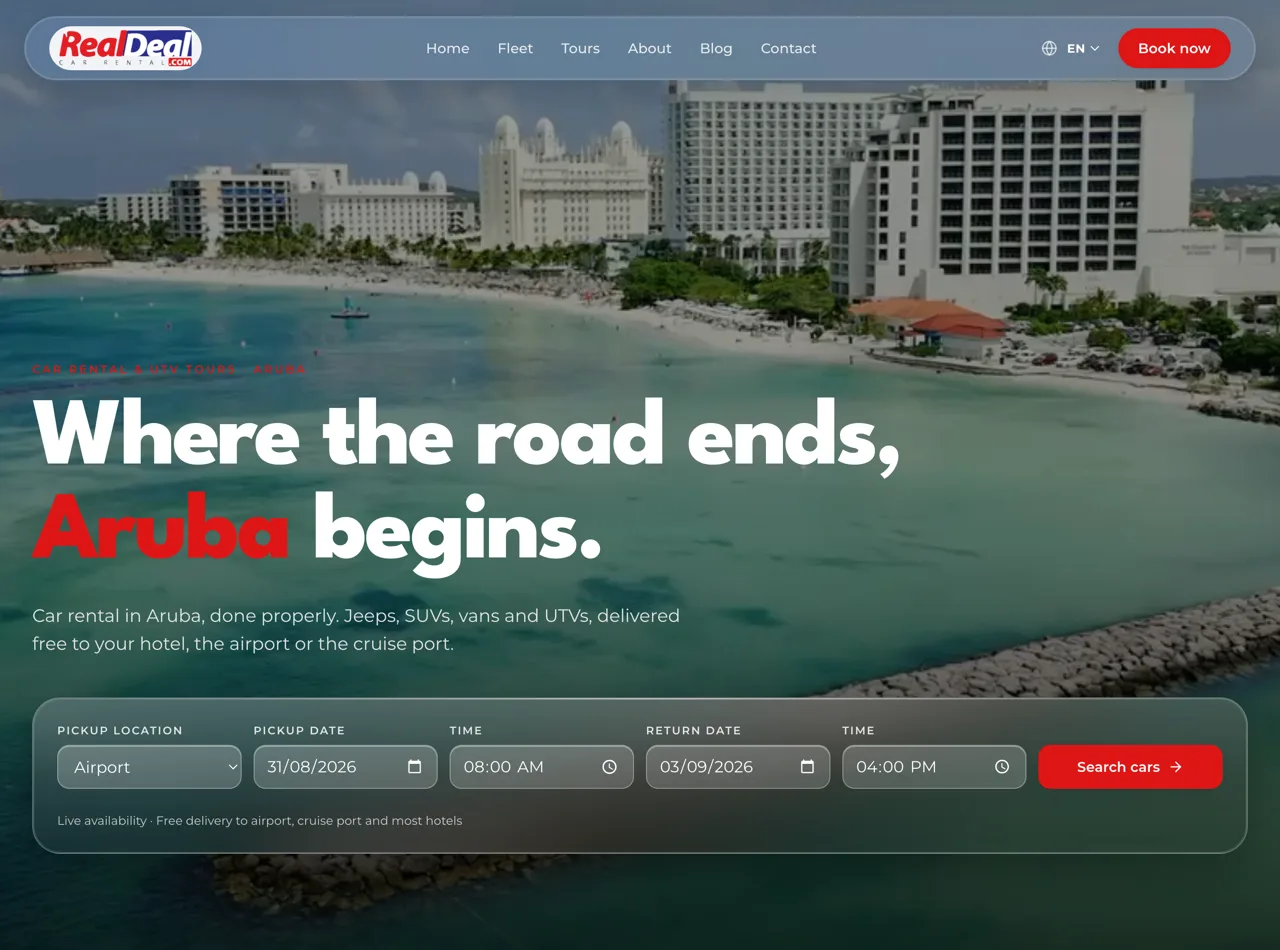
Nothing loses trust faster than a cheap advertised rate that turns into a bigger quote. Real Deal Car Rental learned this from a customer who compared its advertised day rate with a much larger quote for a short trip, and he was right.
The fix was simple to state: only advertise a price you will honour. Real Deal's site now shows a day rate only when it holds for a short trip, a long trip and peak season. Otherwise it asks the visitor for their dates and quotes the real total. If rates change by season, let guests quote their own dates in one tap instead of showing a 'from' price that misleads.
Related: the one-page Jeep Aruba site.
5. Make booking the brightest thing on the page
Give the booking button one colour that nothing else uses, and put it everywhere a visitor might decide. On Jeep Aruba an orange-to-amber gradient marks every call to action, and the page ends on a full-width booking band. Dushi's home page closes on a booking panel.
Then keep the booking short. A simple business can take requests through a good form. A business with seasons, add-ons and payments needs a real booking system: Real Deal and Aventurova take a guest from dates to a paid, confirmed rental in six steps, with every charge named before payment.
6. Give proof a stranger can check
Travellers cannot visit your office before they book, so they look for evidence. Show your Google or TripAdvisor rating where they decide, with real reviews and a link to read more. Use real photos of your vehicles on real roads, not stock images of a car that is not in your fleet. Show your address and a phone or WhatsApp number that gets answered.
Dushi puts its 5.0 Google rating on the home page next to real guest reviews. Jeep Aruba shows its Jeeps on the island's trails and beaches.
Related: our work for Aruba businesses.
7. Be findable by people who are still at home
Your guests search weeks before they fly, from the US, Canada, Europe and South America, in English, Spanish and Dutch. Give every service its own page with a clear title, like 'Jeep rental in Aruba' or 'Airport transfer to Palm Beach', so it can rank. Keep your Google Business Profile complete and ask happy guests for a review.
People also ask AI assistants where to rent or which transfer to trust. Pages that answer plain questions plainly, with prices, rules and real reviews, are the pages those assistants quote.
What a site like this costs
NeoDimensional's website packages are $1,599 for up to 5 pages, $1,999 for up to 8 and $2,999 for up to 30, designed in Figma and built in WordPress or React by the same team. A booking system with live prices and payments is custom software, from $4,999. Every price is fixed in writing before work starts.
Websites usually take 4 to 7 weeks. You pay 30% to start, 40% at review and 30% at launch, to a US company in USD, and the site, the code and the accounts are yours. We fix defects in what we built for 30 days after launch.
Related: car rental booking software in Aruba.