




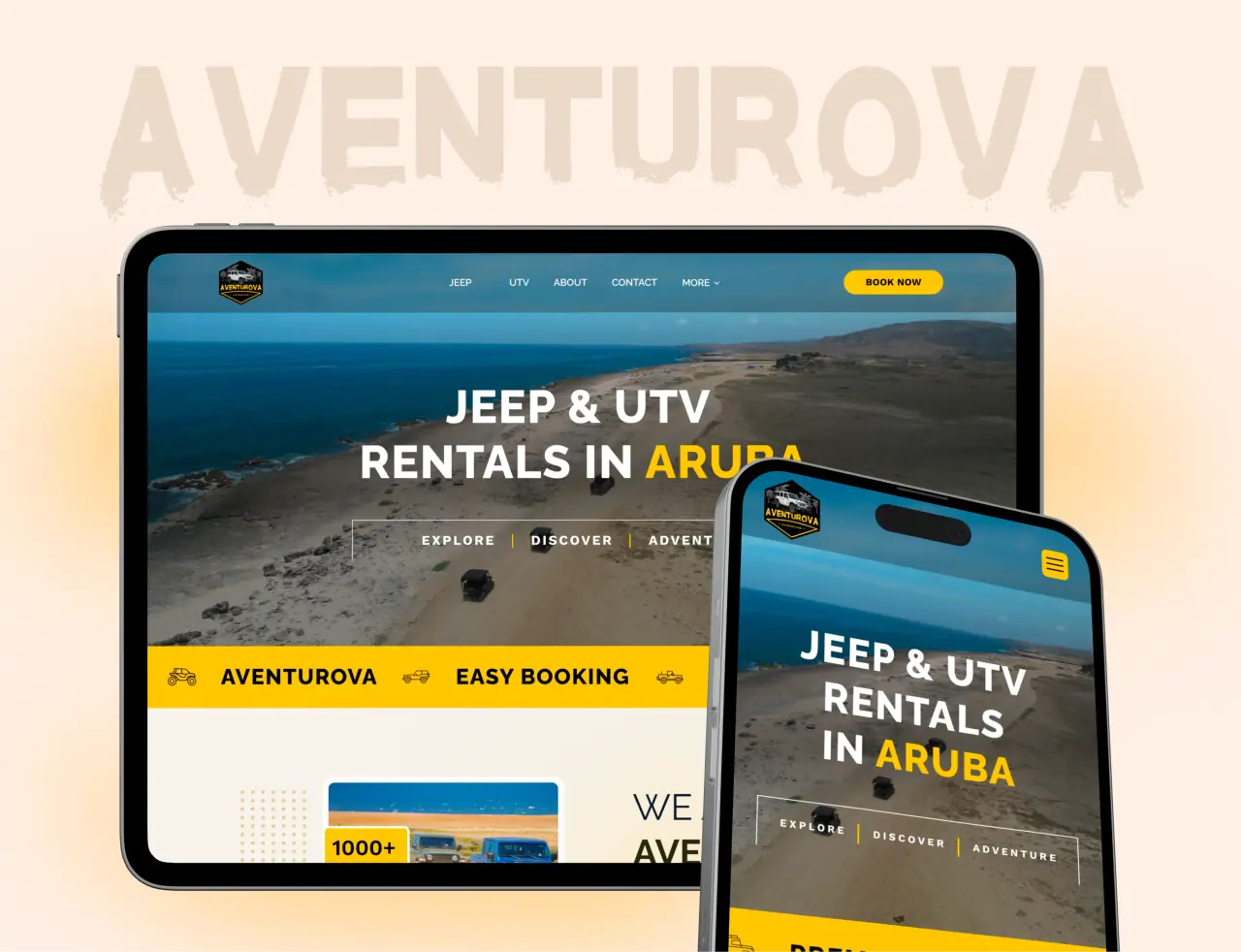
Every rental and tour company in the Caribbean reaches the same fork: keep paying for a booking platform like FareHarbor or HQ Rental Software, or own a system built around how you actually work. Here is an honest way to decide, with the numbers worked through, from the team that built two booking platforms now running in Aruba.
Key takeaways
- Subscription platforms are a good start: fast to set up, nothing to build, and fine while your rules are simple.
- Their cost grows with you. Per-booking fees scale with every sale, and monthly plans grow with users and locations.
- A custom system costs more on day one and nothing per booking after it. The case for it is your rules, not only the fees.
- Run the numbers on your own online sales. If the yearly fees are larger than the build price, the build pays for itself.
- NeoDimensional builds custom booking systems from $4,999, priced in writing before work starts.
Two ways to pay for booking software
Tour and activity platforms such as FareHarbor mostly earn from bookings: no monthly subscription, but a fee on each online booking, usually shown to the guest at checkout. Rental platforms such as HQ Rental Software mostly earn from a monthly plan that rises with fleet size, users and locations. Either way you rent the software. Stop paying and it stops working.
A custom system turns that around. You pay once to have it designed and built, then pay for hosting and any changes you ask for. The software, the code and the data are yours. There is no fee on each booking, because there is nobody in the middle of it.
What the platforms charge
Neither company prints one price for everybody, so treat these as ranges and ask each vendor for a current quote for your business. As of October 2026, public comparisons and software listings report the following.
FareHarbor: no monthly fee. Reported booking fees are around 6% on direct online bookings, usually added to the guest's total at checkout, with a lower operator-side fee on bookings from resellers through its API. Card processing is charged separately.
HQ Rental Software: monthly plans. Listings show entry plans from about $120 a month and a Professional plan around $250 a month, with enterprise pricing for large fleets quoted on request. Payment processing is separate.
Related: custom software for rental businesses.
| Per-booking platform | Monthly rental platform | Your own system | |
|---|---|---|---|
| Example | FareHarbor | HQ Rental Software | Built for you |
| Upfront cost | None | Setup, if any | From $4,999 |
| Ongoing cost | About 6% a booking | $120 to $250+ a month | Hosting only |
| Grows with | Every booking | Users, locations, fleet | What you add |
| Your rules | The platform's settings | The platform's settings | Built in exactly |
| Who owns it | The vendor | The vendor | You |
A worked example
Take an example tour company that sells $250,000 a year online. A 6% booking fee on that is $15,000 a year. Even when the guest pays it, it is $15,000 added to your prices that a competitor with its own checkout does not add. Over three years it is $45,000.
Take an example rental company on a monthly plan at $250. That is $3,000 a year, $9,000 over three years, and it rises when you add a location or more staff logins. The monthly model is cheaper, but the money goes on and you still bend your rules to fit someone else's software.
Against that, a custom system is a one-time build. Ours start at $4,999, and a full rental platform with a counter and back office costs more than that. Either way it is a fixed price agreed before work starts. Put your own numbers in: your online sales, your plan, three years. If the platform's three-year cost is bigger than the build, the case is made on money alone.
The costs that are not on the invoice
The fee is the cost you can see. The bigger cost is usually the gap between how the platform works and how your business works, and the workarounds staff build to cover it.
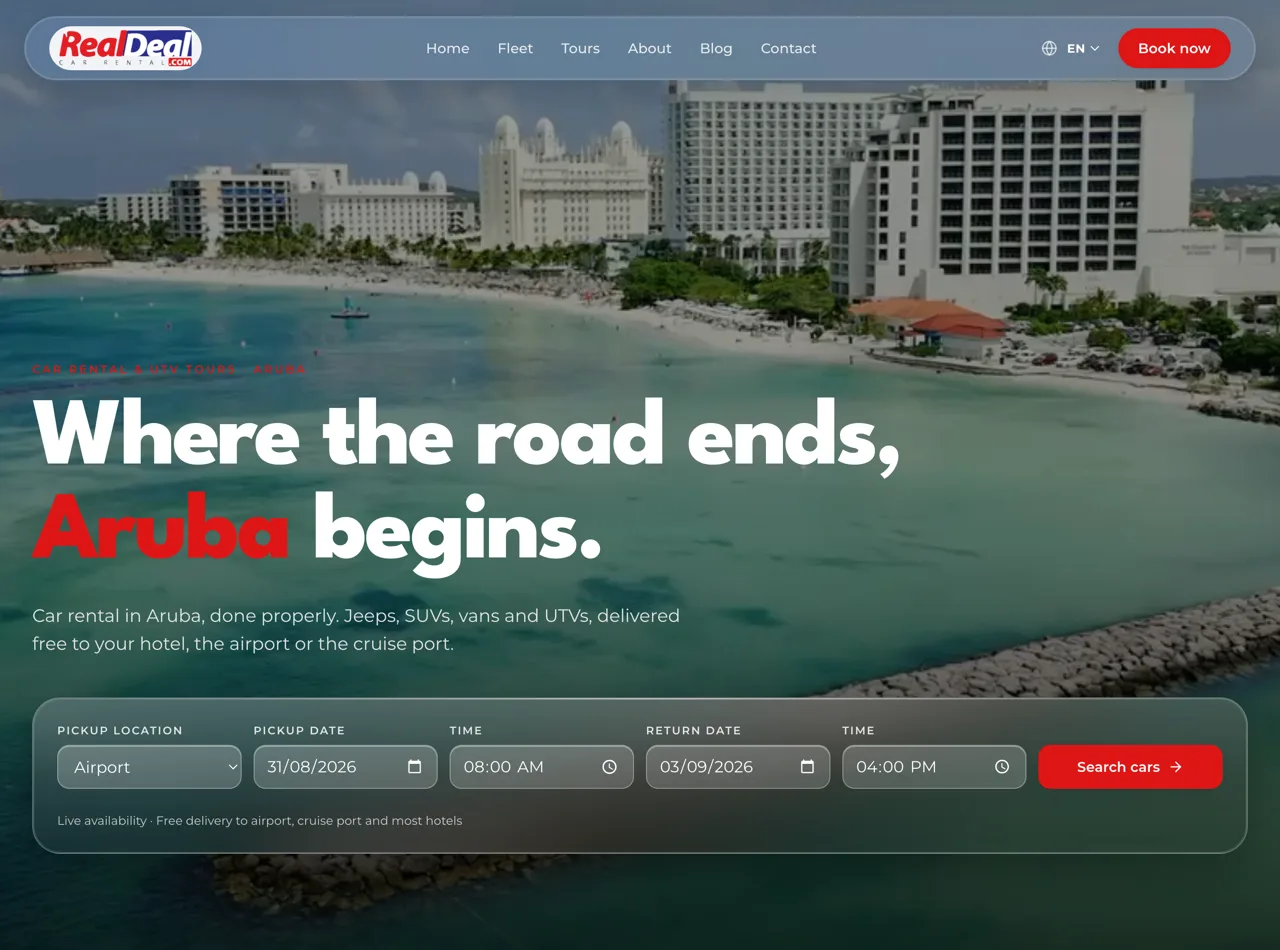
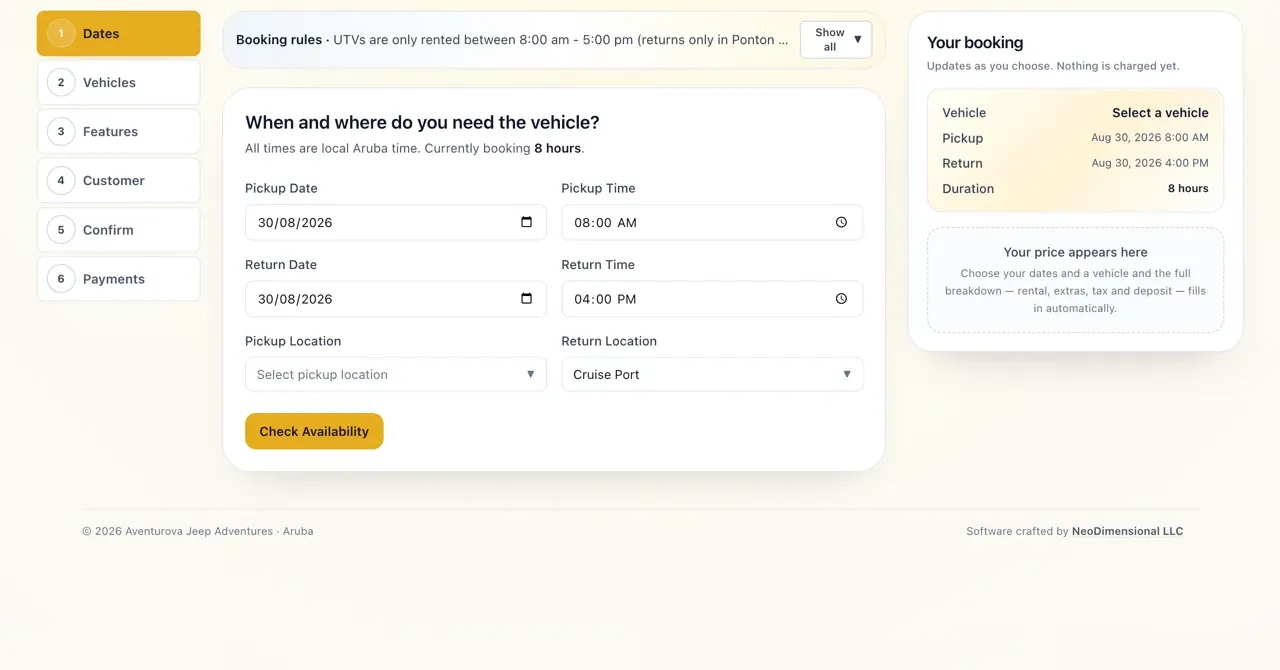
Aruba shows this well. On Aventurova's platform, UTVs rent in four- and eight-hour packages, only in daylight, and return to one office. Protections are taxed on one of our platforms and exempt on the other. Real Deal prices each day at its own season and lowers the per-day rate on longer stays. Hotels and tour desks earn commission on the rental but never on the tax. Each of those is a setting you hope a platform has. In a custom system it is just how the system works.
Related: what our Aruba rental platforms do.
- Rules the platform cannot express, handled by hand
- Prices copied to partner sites that drift out of date
- A checkout fee that makes you look dearer than you are
- Your guest data living in someone else's product
When a subscription is the right answer
Be honest with yourself here. If you are new, sell a few hundred bookings a year, and your pricing fits a standard model, a platform is the sensible choice. You are live this week, the vendor handles updates, and the fee is small while volume is small.
A platform also suits a business that sells mainly through online travel agencies and resellers, where the platform's connections to those channels are the point.
When your own system is the right answer
Your own system makes sense when at least two of these are true: your yearly fees are climbing past what a build would cost; your pricing or rules do not fit the platform; staff run part of the business outside it; you want partners and hotels to show your live prices; or you want the guest data and the brand experience to be fully yours.
That is where Real Deal Car Rental and Aventurova were. Real Deal moved out of its previous vendor's system in April 2026. Both now run online bookings, desk payments, signed agreements, partner referrals and the back office from one system each, and the owner reviewed us 5.0 on Clutch.
Related: the Aventurova Jeep and UTV platform.
How a switch works without losing a booking
The fear is a gap: a weekend where nobody can book. A careful switch avoids it. Model your prices and rules first, build and test the new system alongside the old one, move existing bookings across, then switch the booking button over. The old platform stays as a fallback until the new one has taken real bookings.
We have done this with money in the middle. Real Deal moved from Mollie to Stripe in September 2026 with no downtime, because the payment provider is a setting in the database. Switching over, or back, is one update.
With NeoDimensional the price is fixed in writing after a 30-minute call. You pay 30% to start, 40% at review and 30% at launch, to a US company in USD. The code and accounts are yours, and we fix defects for 30 days after launch.