





Real Deal Car Rental Booking Platform
A booking platform and marketing site for a car, Jeep and UTV rental company in Aruba. It quotes real prices for real dates, takes payment online and at the counter, and runs the business behind the scenes.
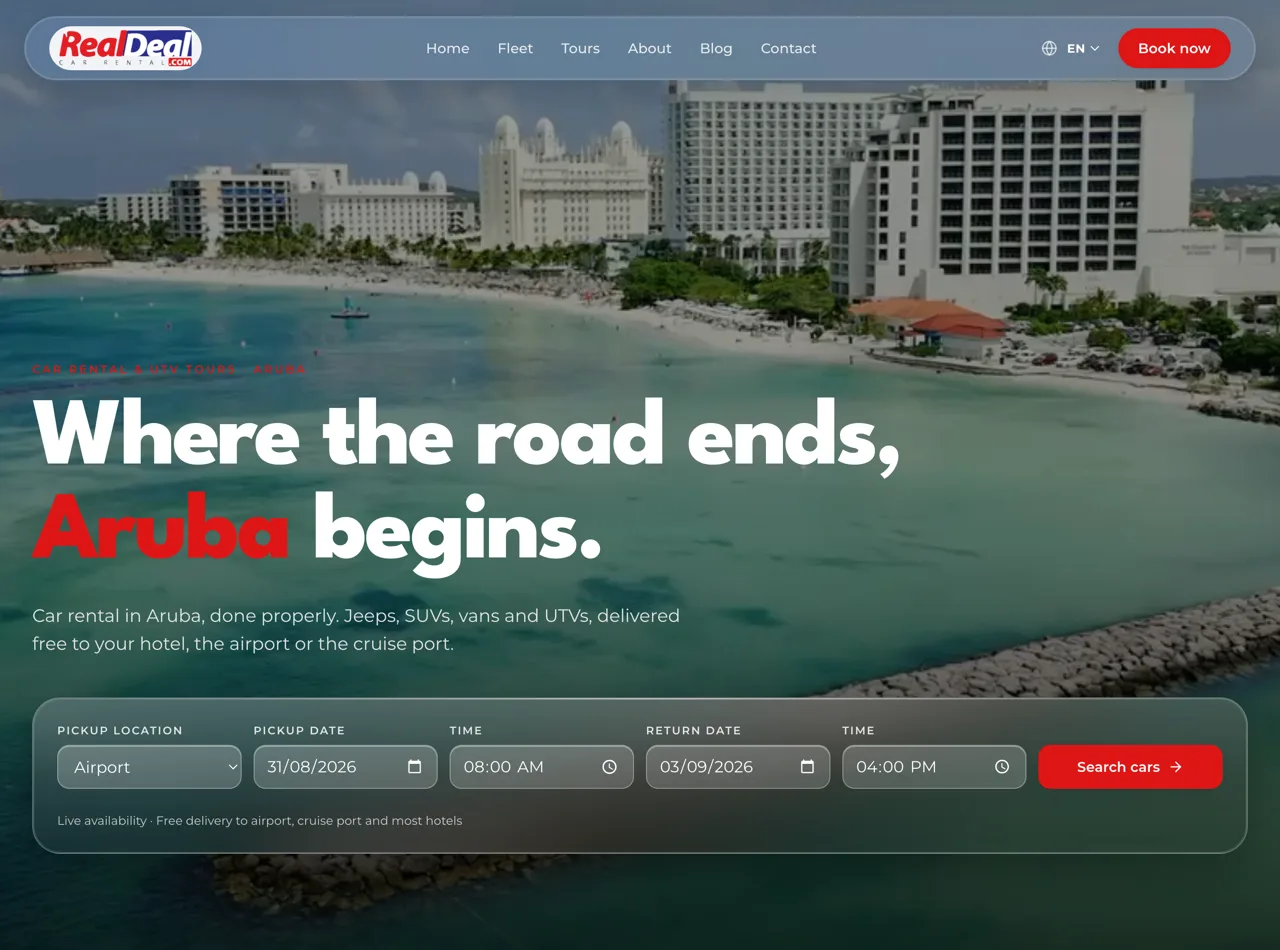
- 16Vehicles bookable online, across cars, SUVs, vans, Jeeps and UTVs
- 5Pickup and return points, including the airport and cruise port
- 12Optional add-ons and protections, each priced per day or one-off
- 6Steps from picking dates to a paid, confirmed rental
What we built, and why.
The brief, the problem underneath it, and where it ended up.
One system runs the site, the booking and the counter.
Real Deal rents cars, Jeeps, vans and UTVs to visitors arriving by plane and cruise ship. Delivery to hotels, the airport and the cruise port is free. We built the booking platform the customer uses, the marketing site that feeds it, and the back office behind both. The two sites share one source of truth. The site reads its fleet and prices live from the booking system. Remove a vehicle in the admin and it leaves the website too.
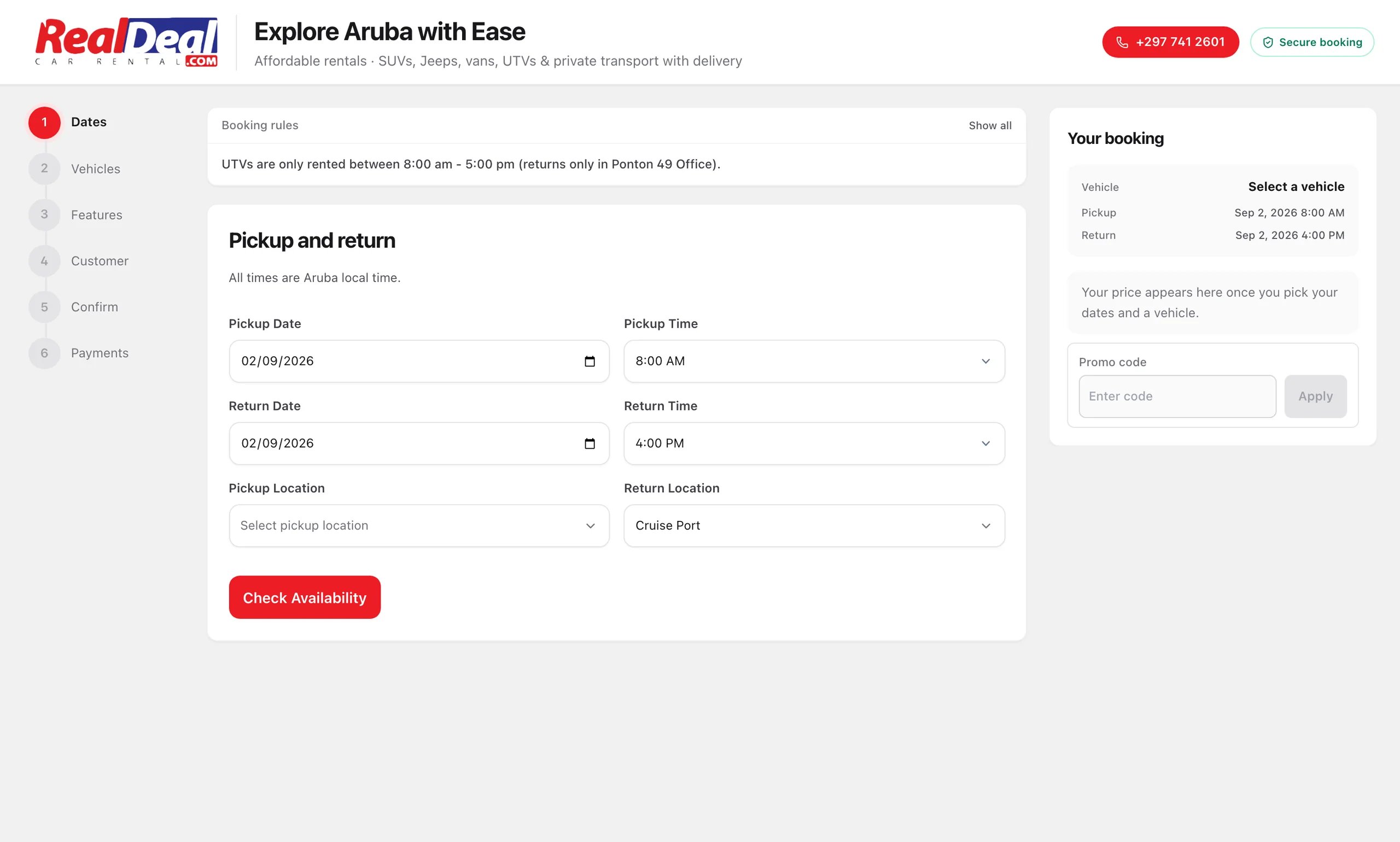
Step one asks for dates and locations before anything else. No price is shown yet, because none is knowable yet.
The advertised price was not the real price.
The business had been advertising a single day rate while actually charging a seasonal, length-dependent one. A customer wrote in quoting the advertised price against a much larger quote for a short trip, and he was right. Any honest fix had to start by deciding what a price means when the rate falls the longer you stay. Then every screen, quote and contract had to agree on it.
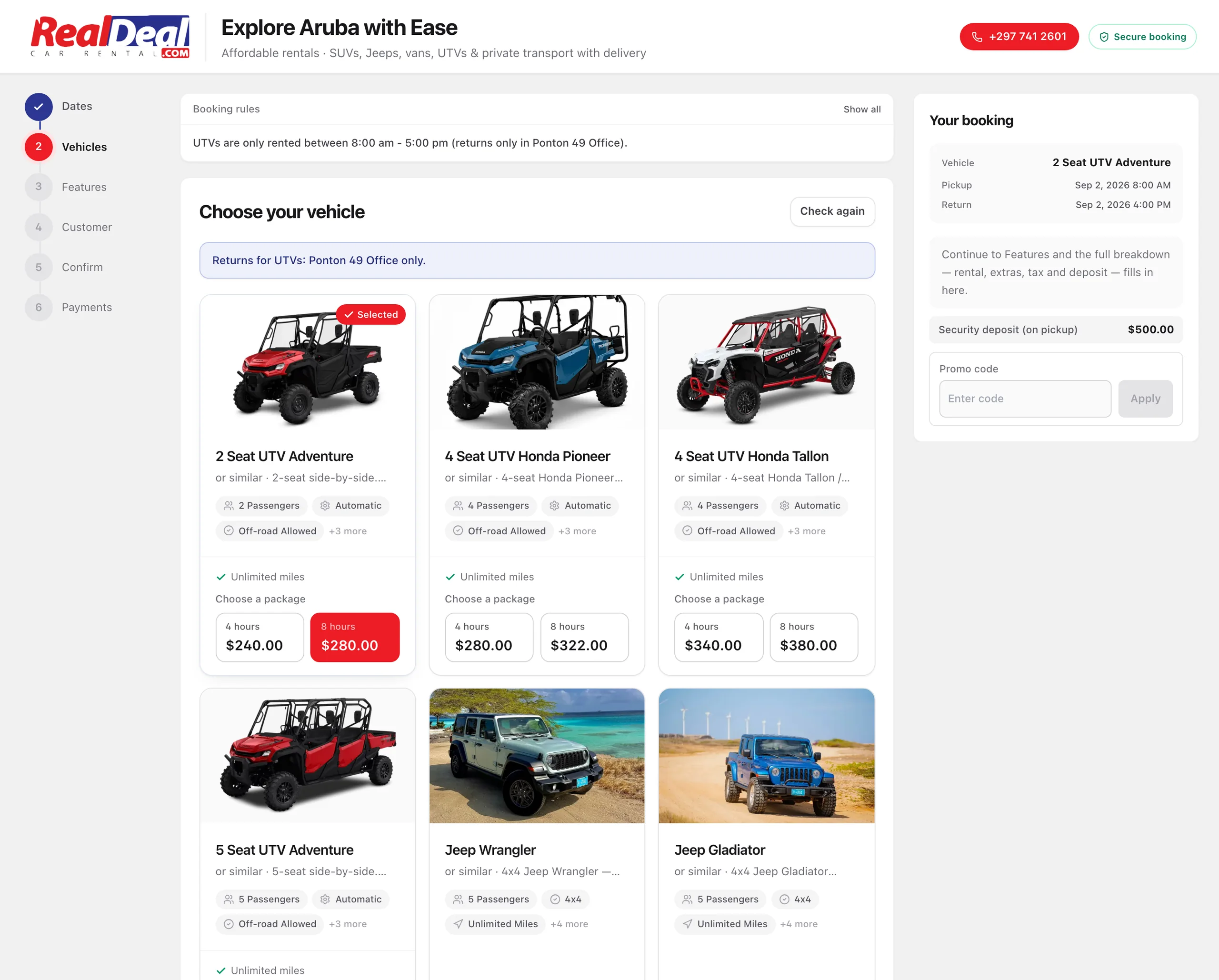
Step two prices the whole fleet against those exact dates. The UTVs are grayed out here because a seven-day window is not a rental they offer. The rules are enforced, not just described.
One pricing engine gets the last word.
We built one pricing engine and gave it the last word. It prices each day of a rental at that day's own season and applies a duration ladder across the whole stay. A two-day trip and a two-week trip get genuinely different per-day rates. Then we made the marketing site refuse to advertise a number the visitor cannot actually buy. A rate is published only if it holds across a short trip, a long trip and peak season. Otherwise the site quotes the visitor their own dates. The same engine drives the booking flow, the staff booking form and the customer quote.
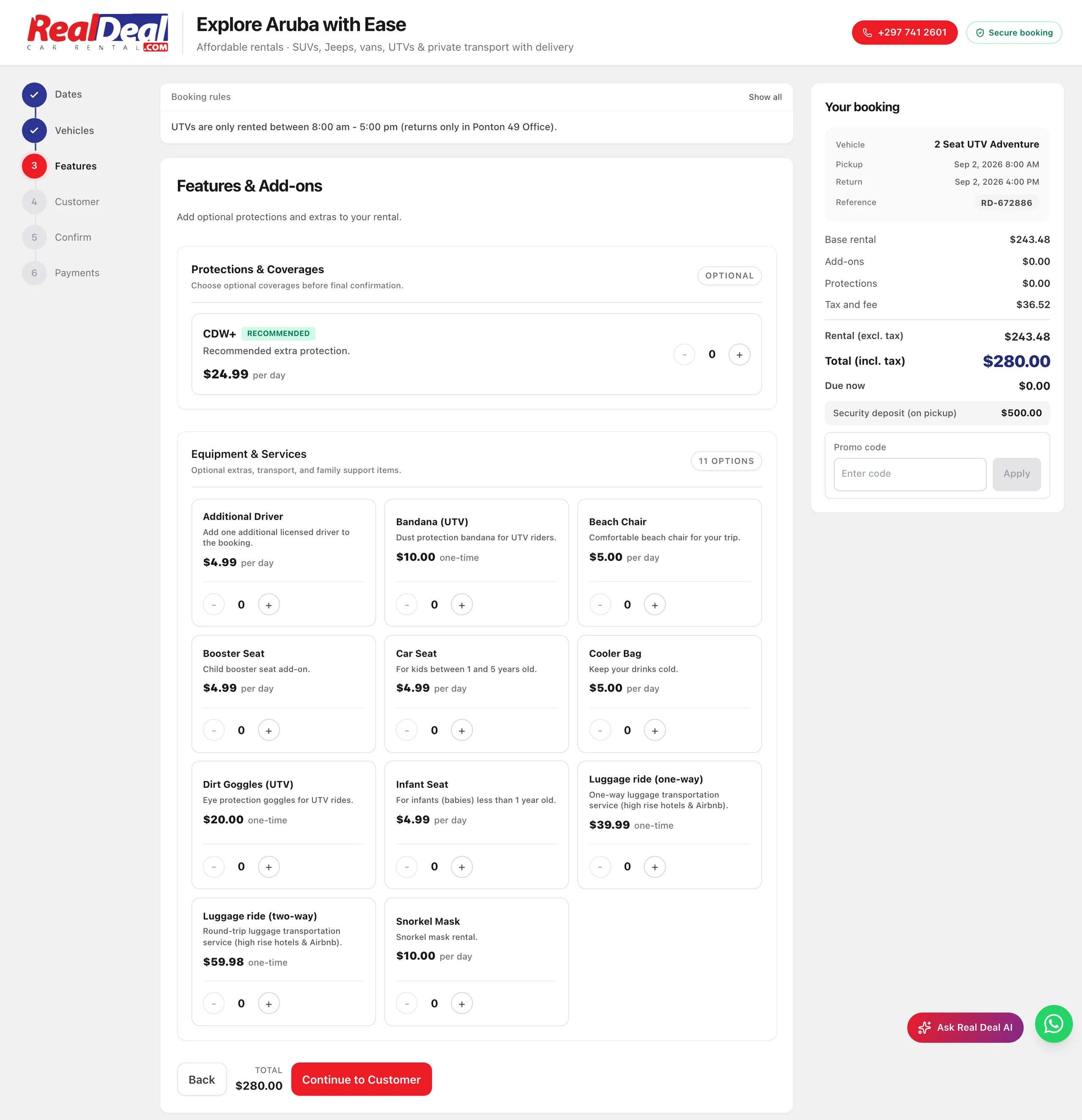
Step three names every optional charge. The panel keeps a running total: rental, tax and fee, deposit, and what is actually due now.
From the pricing engine to the back office.
- Seasonal pricing engine with duration ladders, priced per day against that day's own season and applied across the whole stay.
- A marketing site that only advertises a rate it can honor, verified against short, long and peak-season windows before it is shown.
- Six-step booking flow quoting live availability, add-ons, protections, taxes and a real total before the guest commits.
- Online payments through Mollie plus cash and card at the desk, with one reconciled balance across all three.
- Signed rental agreements generated as PDFs, itemizing every extra so nothing is charged without being named.
- Referral links for hotels and tour desks, attributed automatically, with commission paid on the rental and never on tax.
- Back office for the counter: day board, fleet and maintenance, contracts, staff scheduling and financial reporting.
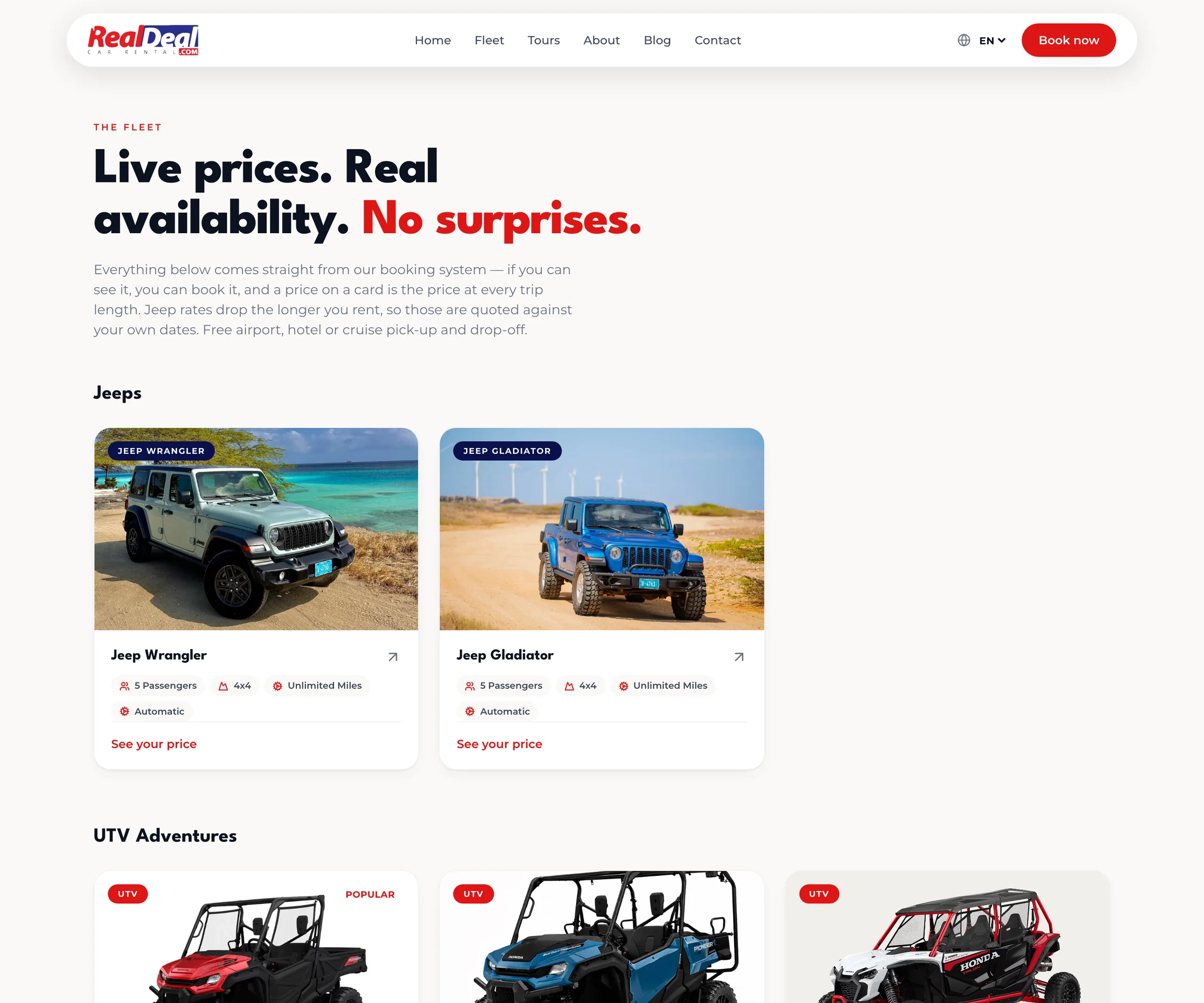
The marketing fleet page reads live from the booking system. A vehicle whose rate changes with trip length shows no day rate at all, because no single number would be true.
A price the business can stand behind.
Customers are quoted a price the business can stand behind. The counter runs the day from the same system that took the booking. Both the booking platform and the marketing site are live and in daily use.
6 phases, in the order they happened.
What was built first, what waited, and what is still being worked on.
Built with
- Application
- Next.js App Router, TypeScript, React Server Components
- Data
- PostgreSQL and Prisma, with serializable transactions on anything that moves money
- Payments
- Mollie for online payment and refunds; cash and terminal card at the desk
- Documents
- Server-generated rental agreement PDFs, signed and stored per booking
- Delivery
- Vercel serverless, object storage for contracts and fleet photography
- Pricing first
Seasons, duration ladders and tax modeled before a single screen was drawn — everything downstream depends on the number being right.
- The public flow
Six steps from dates to payment, quoting live availability and a real total before the guest commits.
- Money, three ways
Mollie online, cash at the desk, card on the terminal — reconciled into one balance per booking.
- The counter
Back office for the people running the day: fleet, contracts, scheduling, reporting.
- The shop window
A marketing site that reads fleet and prices from the booking system rather than repeating them.
- Still running
Ongoing work against the live business — rate-card seasons, reporting and the AI reply assistant.
The decisions that took longest to get right.
And why they went the way they did.
One engine, or three different truths
The marketing site, the public booking flow and the staff booking form all need a price. Written three times they drift, and the drift is invisible until a guest quotes one screen at another. All three call the same engine, and the rental agreement is generated from the same result. No screen can show a number the contract does not recognize.
A rate the site is allowed to advertise
Because the per-day rate falls with trip length, no single number is true for every booking. The marketing site now probes a short trip, a long trip and peak season. It publishes a rate only when all three agree. When they disagree it says nothing and sends the visitor to quote their own dates. That is why some cars show a price and others deliberately do not.
Part-days round up, everywhere or nowhere
A pickup at 8:00am returning 4:00pm seven days later is eight rental days, not seven and a third. That rule has to hold in the quote, the extension, the late-return charge and the invoice. Otherwise two screens disagree about a real amount of money. It lives in one function that all of them call.
A card row stores what the terminal charged
A card payment at the desk carries a processing fee. Storing the rental amount instead of the amount charged left a phantom balance the size of the fee on every card booking. Card rows are stored gross, which is what the terminal took. The fee is separated for reporting instead of being quietly netted off.
Serializable where it counts
Two staff can edit the same booking at once, or a payment can land while someone edits it. Each then reads a balance and writes back a total computed from a stale one. The money paths run in serializable transactions with a retry, so the second writer is made to re-read rather than overwrite.
Every extra is named on the contract
A guest asked how he was meant to know that extra protection had been added. The total moved but nothing said why. The rental agreement now itemizes the charge: the rental, each protection, each add-on and its quantity. The box grows to hold them and foots to the total the guest signs.
In the client’s words.
Verified Clutch review, 5.0.
“The team was always available, no matter the time. Guljar and his talented team developed three professional booking software systems and designed and developed more than four outstanding websites.”
Three more projects.
Different briefs, the same team.
 MetaMetric Analytics Platform
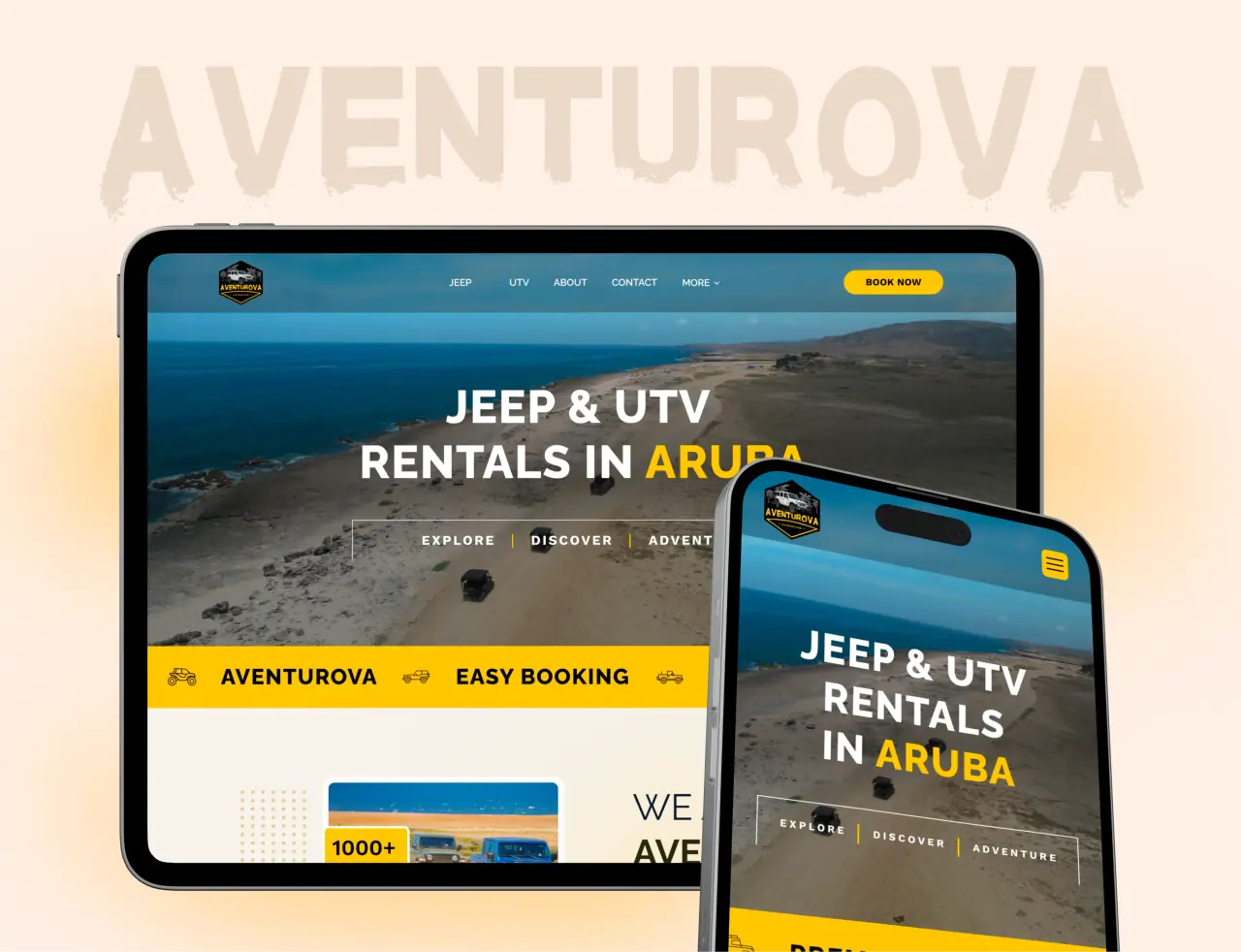 Aventurova Jeep & UTV Rental Platform
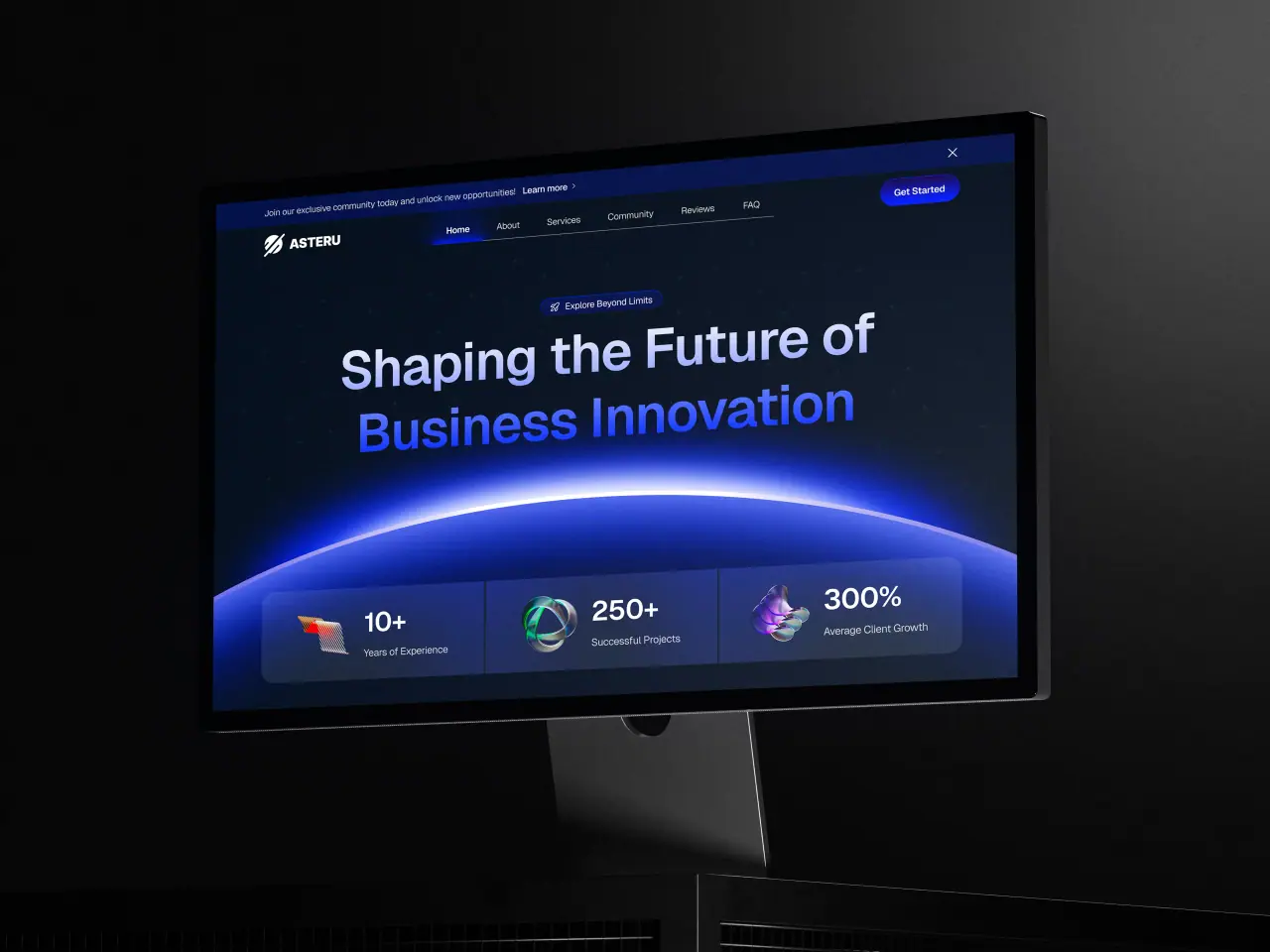 Desktop Dashboard UI
Tell us what you are building.
A 30-minute call to scope it, then a written, fixed price before any work starts.
We reply within 2 business hours (9am–6pm EST) · hello@neodimensional.com