




Short answer: there is no single best UI/UX design agency in the USA, only the best fit for what you need built. IDEO and frog lead enterprise research and transformation. Huge and Instrument lead brand-led digital work. Work & Co and Fantasy design large products for companies with their own engineers. Clay is known for premium interface craft. Ramotion and NeoDimensional (us) carry the design on into a working build. Below: how we grouped them, a side-by-side table, what US agencies charge, and how to choose one.
Key takeaways
- Choose the type of agency before the name: research consultancy, product studio, design-and-build team or staffing shop.
- Judge an agency on live products you can use, the named people who will do the work, and what happens after design.
- Get the price, the phase sign-offs and ownership of the files and code in writing before any work starts.
- If you need working software rather than design files, one team that designs and builds removes the costliest handoff.
How we picked
Most best-agency lists are paid directories. This one is not ranked by who paid. It is grouped by what each agency is built to do, because a five-person startup and a Fortune 500 company need very different partners.
Full disclosure: NeoDimensional publishes this list and is on it. We have been specific about who we are not right for, so you can rule us out quickly if that is the honest answer. We have not published other agencies' team sizes, founding dates or rates: those change often, and we would rather print nothing than a number we cannot stand behind.
- Work you can verify, not adjectives
- A visible process from research to developer handoff
- A clear answer on who builds the product after design
The best UI/UX design agencies in the USA
Grouped by the job each one does, not ranked one to nine. An enterprise innovation consultancy and a design-and-build studio are not really competitors: they solve different problems at different budgets, and choosing the wrong category is the expensive mistake.
Locations are each firm's primary US office. Ask every firm on your shortlist for its current team, rates and availability directly; how quickly and plainly they answer is a useful test in itself.
Related: our UI/UX design agency service.
- Enterprise research and transformation: IDEO, frog
- Brand-led digital experience: Huge, Instrument
- Large-scale product design: Work & Co, Fantasy
- Premium interface craft: Clay
- Design that continues into a build: Ramotion, NeoDimensional
IDEO — enterprise innovation and research (Palo Alto, CA)
IDEO is the firm most associated with popularising human-centered design as a business method. Its work leans toward research, service design and organisational strategy: the question is usually what to build and why, not how to make a screen better.
Right for a large organisation with a genuinely ambiguous problem and the budget to fund discovery. Wrong if you already know what you are building and need it designed and shipped this quarter.
frog — global design and transformation programmes (San Francisco, CA)
frog is one of the longest-established design consultancies and now sits inside a much larger consulting group. That shapes the work: multi-market programmes, service and product design at enterprise scale, usually alongside a wider transformation effort.
Right for enterprises running change across several markets or business units. Wrong for a single product team wanting a focused engagement.
Huge — brand-led digital experience (Brooklyn, NY)
Huge built its reputation on large brand and digital experience work for well-known consumer names: platforms and flagship sites where the brand expression matters as much as the interface.
Right when the work is as much brand as product. Wrong when you need deep engineering delivery attached to the design.
Work & Co — large-scale digital products (Brooklyn, NY)
A product studio rather than a classic agency: Work & Co is known for designing and shipping products that large companies put in front of millions of users, and for staying involved through delivery rather than handing over a deck.
Right for a serious product with a serious budget and an internal team to work alongside. Wrong for a first version you are still validating.
Instrument — brand and digital for large tech companies (Portland, OR)
Instrument works where brand and product meet for major technology clients, with a strong reputation for craft-led campaign and platform work.
Right for brand-and-product programmes at scale. Wrong as a build partner for a small SaaS team.
Fantasy — product design for global brands (New York, NY)
Fantasy focuses on product and experience design for large international brands, typically on flagship digital products rather than marketing sites.
Right for a flagship product with an established internal engineering group. Wrong if you need the engineering supplied too.
Clay — premium interface and brand craft (San Francisco, CA)
Clay is known for a high level of visual and interface craft for technology companies. The work is unmistakably polished, and priced as premium design work usually is.
Right when visual quality is the differentiator and you have engineering in-house. Wrong when budget is the binding constraint.
Ramotion — brand plus UI/UX with development (San Francisco, CA)
Ramotion pairs branding and interface design with development capability, which puts it in the same broad category as us: design that continues into a build rather than stopping at handoff.
Right for tech companies wanting brand and product from one team. Wrong if you only need a short, contained design sprint.
NeoDimensional — design and build in one team (Albuquerque, NM)
This is us. NeoDimensional LLC is registered in Albuquerque, New Mexico, with a second studio in Sylhet, Bangladesh: seven people who run UI/UX design and full development as one group. The people who design the product are the people who ship it, so there is no handoff between two vendors, and one party is accountable when something does not work.
Right for startups, growing businesses and B2B or SaaS teams that need a website or product designed and actually built, at a price published before the first call. Wrong if you want a large enterprise consultancy, a multi-market transformation programme or a brand campaign: the firms above are better at those, which is why they are on this list.
Side-by-side comparison
Read the Best for column first and match it to your situation, not to an agency's reputation.
Budgets are left out on purpose: most agencies do not publish them, and they change. The next section covers what each type of agency typically charges.
| Agency | Best for | Known for | Based in |
|---|---|---|---|
| NeoDimensional | Startups & SMBs needing design + build in one team | UI/UX and full development under one roof | Albuquerque, NM |
| IDEO | Enterprise innovation & research | Pioneering human-centered design | Palo Alto, CA |
| frog | Enterprise transformation programs | Long-standing global design & innovation firm | San Francisco, CA |
| Huge | Large brand & digital experience work | Big-brand digital experience programs | Brooklyn, NY |
| Work & Co | Large-scale digital products | Designing and shipping major products | Brooklyn, NY |
| Clay | High-end interface & brand for tech | Premium UI and visual craft | San Francisco, CA |
| Ramotion | Brand + UI/UX with development | Branding and interface for tech companies | San Francisco, CA |
| Instrument | Digital brand & product programs | Brand-led digital work | Portland, OR |
| Fantasy | Product design at scale | Interface and product design | New York, NY |
What a UI/UX design agency costs in the USA
US prices for UI/UX work vary enormously, because the scopes do. Three things move the number most: how much research is included, how many screens and states get designed, and whether engineering is part of the price.
As a rough guide by type: freelancers bill by the hour or by the task. Small studios and design-and-build teams usually quote a fixed project fee, from a few thousand dollars for a small website and rising with the size of the product. Enterprise consultancies price by programme, and those commonly run well into six figures. Treat any of these as the start of a conversation, not a quote.
Our own prices are published and cover design and development together: the site is designed in Figma and built in WordPress or React by the same team. Custom software and web apps start at $4,999 and are priced in writing after a 30-minute call.
Whoever you hire, get the price fixed and the scope in writing before work starts. An hourly estimate with no cap moves the risk of every surprise onto you.
Related: published design-and-build prices.
| Package | Scope | Price | Includes |
|---|---|---|---|
| Starter website | Up to 5 pages | $1,599 | Figma design, WordPress or React build, on-page SEO setup, 30 days of fixes |
| Business website | Up to 8 pages | $1,999 | Design system and components, a CMS you edit yourself, 2 revision rounds |
| Growth website | Up to 30 pages | $2,999 | Blog or content collections, motion, speed optimisation, priority delivery |
| Custom software | Web apps, dashboards, portals | From $4,999 | Figma design and a Next.js build, scoped on a call |
How to choose a UI/UX design agency in the USA
Start with the type of agency, then compare names inside that type. If you need a product shipped this quarter, a research consultancy is the wrong tool however good it is. If you have not yet decided what to build at all, a research-led firm is worth the extra cost.
Practicalities count too. Check how many working hours they overlap with your team, how feedback rounds work, and who you call when something breaks after launch.
Then give every agency on your shortlist the same brief and score them on the same six things. Strong agencies make these easy to check; weak ones answer in adjectives.
- Live products you can open and use, not only mockups
- The named people who will do your work, and their seniority
- Research that visibly changed a design on a recent project
- Every state designed: empty, loading, error and first use
- A design system, and a clear plan for who builds it
- A fixed price, phase sign-offs and file ownership in writing
Red flags to walk away from
Most bad agency experiences were visible before the contract was signed. These are the signs worth taking seriously.
One of them is reason enough to ask a harder question. Two usually means keep looking.
- A portfolio of concept shots, with nothing live you can use
- Senior people pitch the work, and nobody will say who does it
- An hourly estimate with no cap and no written scope
- Promised results, such as a conversion lift, before any research
- Design that stops at polished screens: no states, no system, no handoff plan
- No clear answer on who owns the Figma files and the code at the end
Questions to ask before you sign
Ask every agency the same questions and score the answers rather than the presentation. Strong answers are specific: they name people, describe a recent project, and admit what went wrong.
Weak answers stay general. If an agency cannot tell you who will do the work or how design reaches engineering, it is telling you how the project will go.
- Walk me through the research on a recent project. What did it change?
- Who exactly will work on our project, and how senior are they?
- What do you hand to developers, and do you stay involved during the build?
- How do feedback rounds and revisions work?
- Is the price fixed, and what happens if the scope changes?
- Who owns the Figma files, the code and the accounts when we finish?
- What happens in the month after launch?
Agency, company, firm or studio: what the labels mean
Searches for a UI/UX design company, a UX design firm, a user interface design agency or a UI/UX studio all return roughly the same businesses. The words are used interchangeably in the US market, so none of them tells you what you are buying. The operating model does, and there are four.
A consultancy sells research and strategy, staffed by a rotating team and priced by the programme. A product studio sells a designed product, usually with a small senior team on one engagement at a time. A design-and-build team sells the working software as well as the design, so nothing is handed to someone else to interpret. A staffing shop sells you people by the hour, and you manage them.
Pick the model first and the name matters less. The expensive mistake is hiring a research consultancy when you needed a product shipped, or a staffing shop when you needed someone to own the outcome.
Where NeoDimensional fits
We are a design-and-build team. NeoDimensional was founded by Guljar Hosen, and the same group runs research, interface design in Figma and the build, so the product that launches is the one you approved.
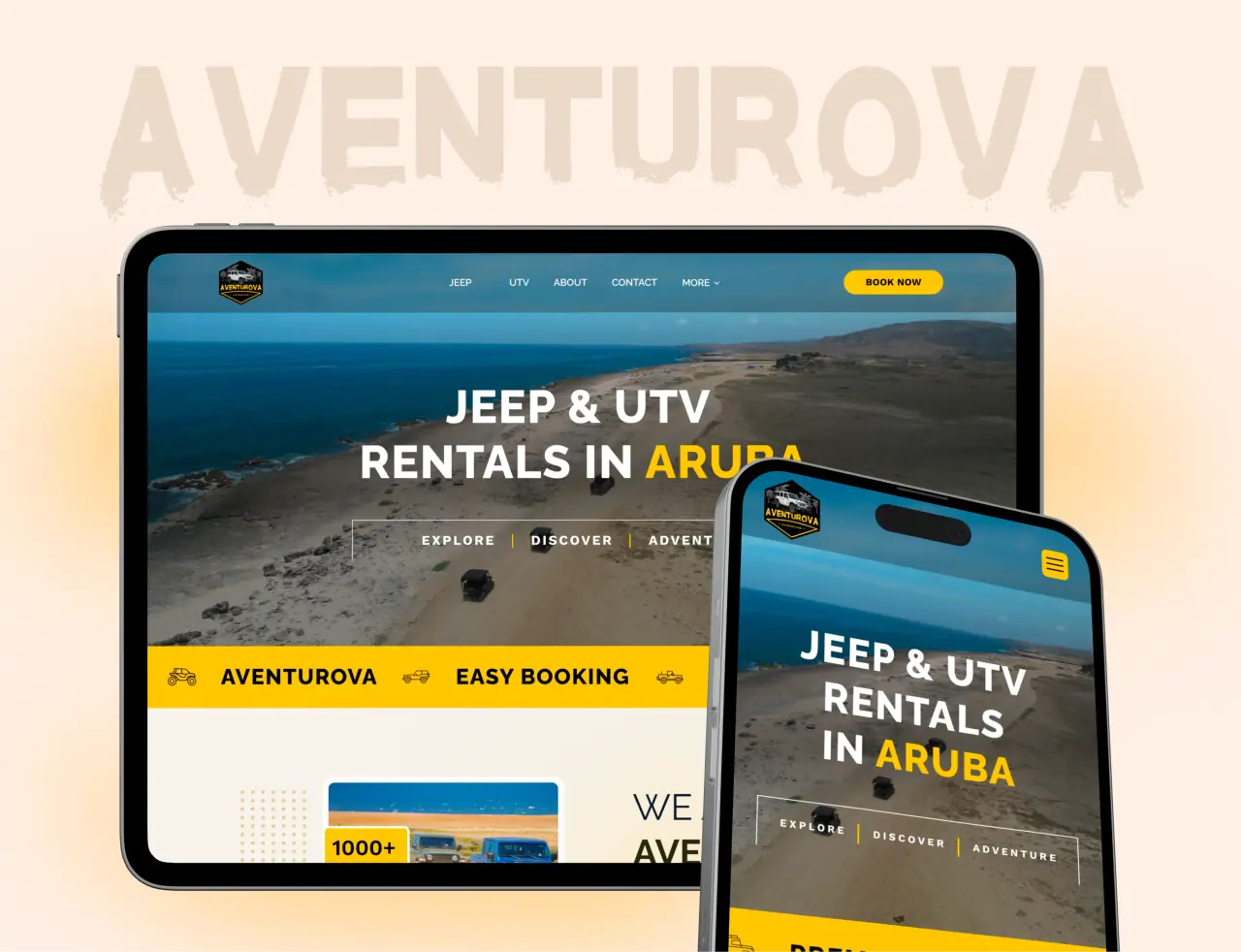
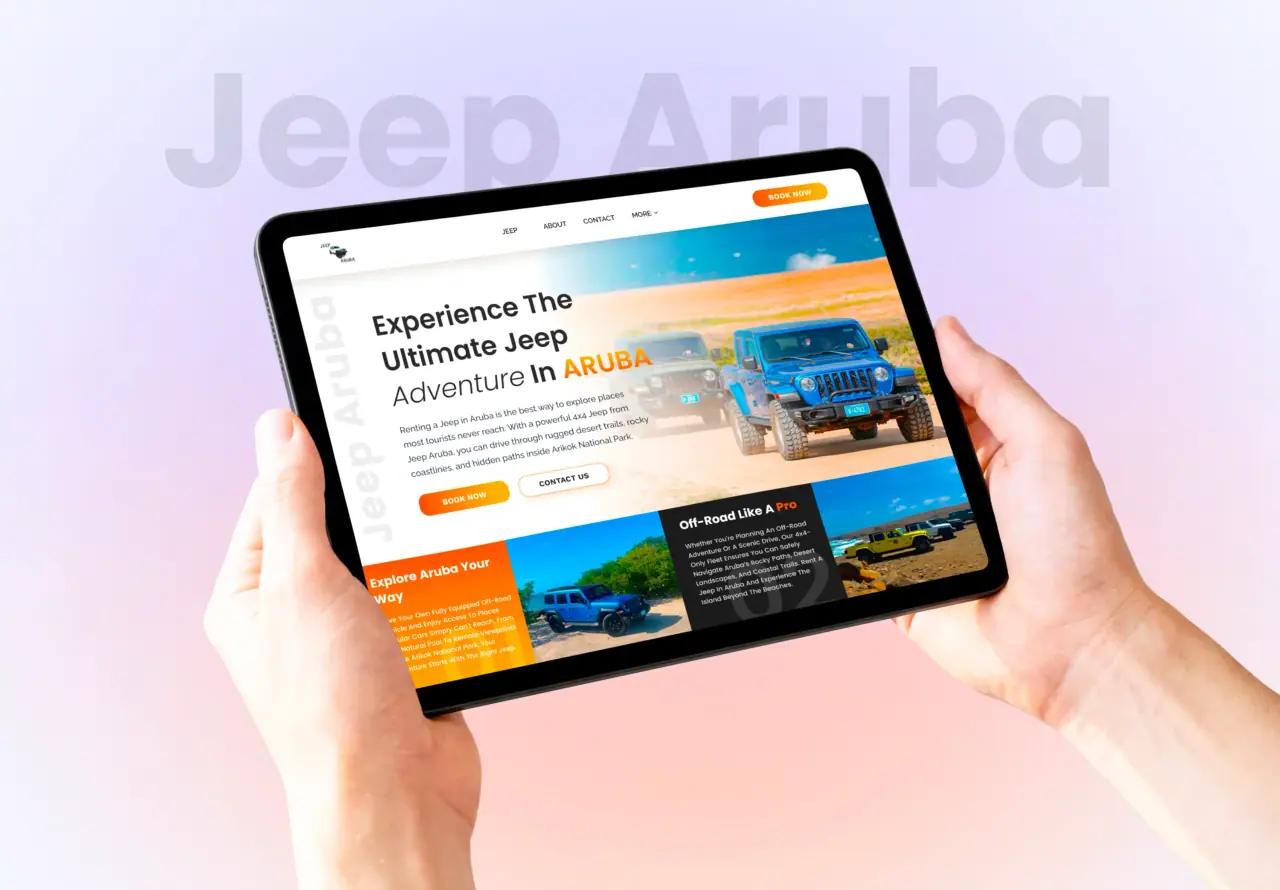
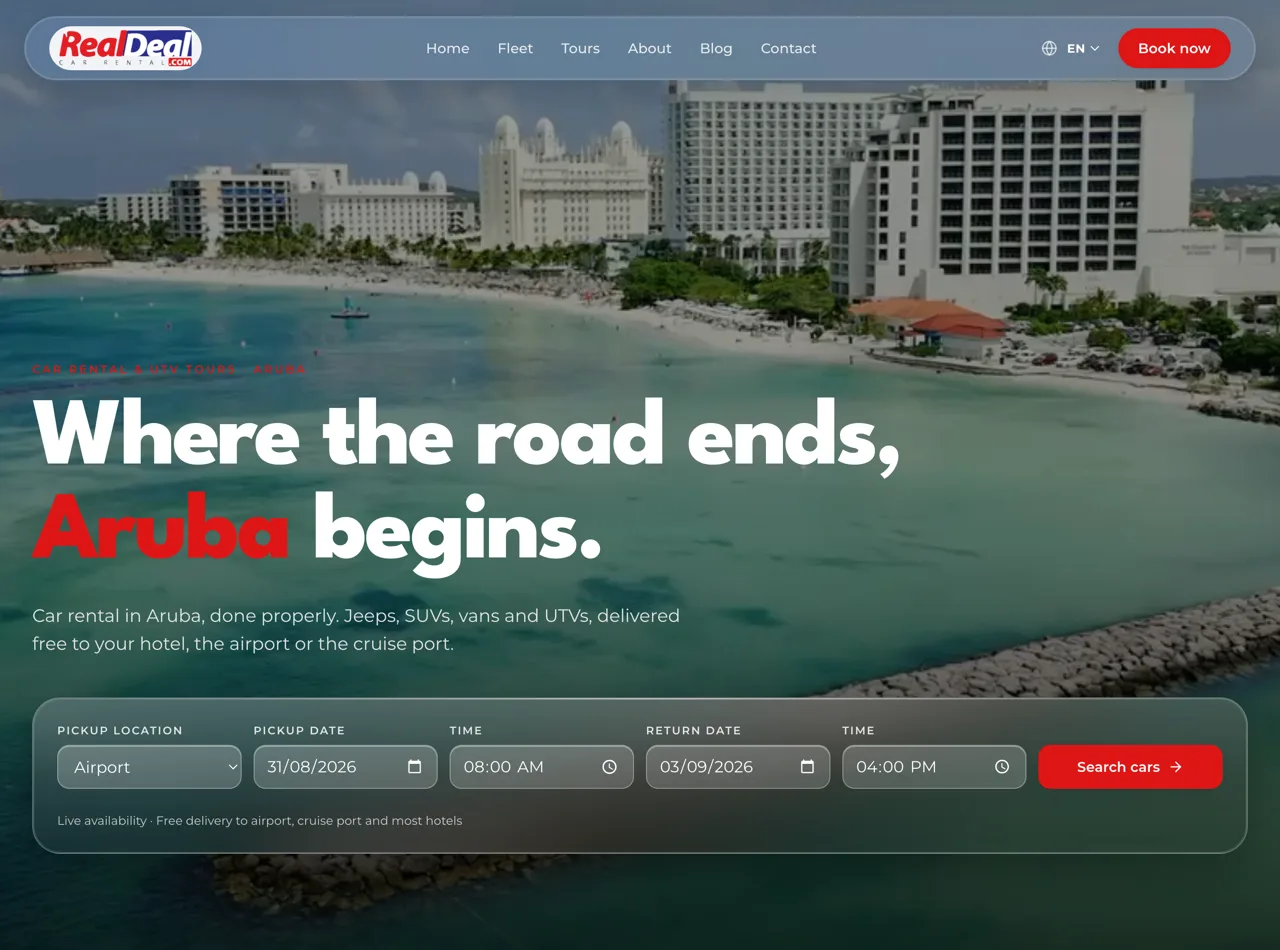
The work is public. Real Deal Car Rental and Aventurova, two booking platforms live in Aruba, were designed and built by us, and the Real Deal work carries a verified 5.0 review on Clutch.
How a project runs: a fixed price in writing before work starts, sign-off at the end of each phase, payment of 30% to start, 40% at review and 30% at launch, and 30 days of fixes after launch. The Figma files, the code repository and the accounts are yours.
Not a fit: an enterprise research programme, a multi-market transformation, a brand campaign, or a project that needs a large team on site. If that is yours, the firms above are the better call, and on a 30-minute call we will tell you so.