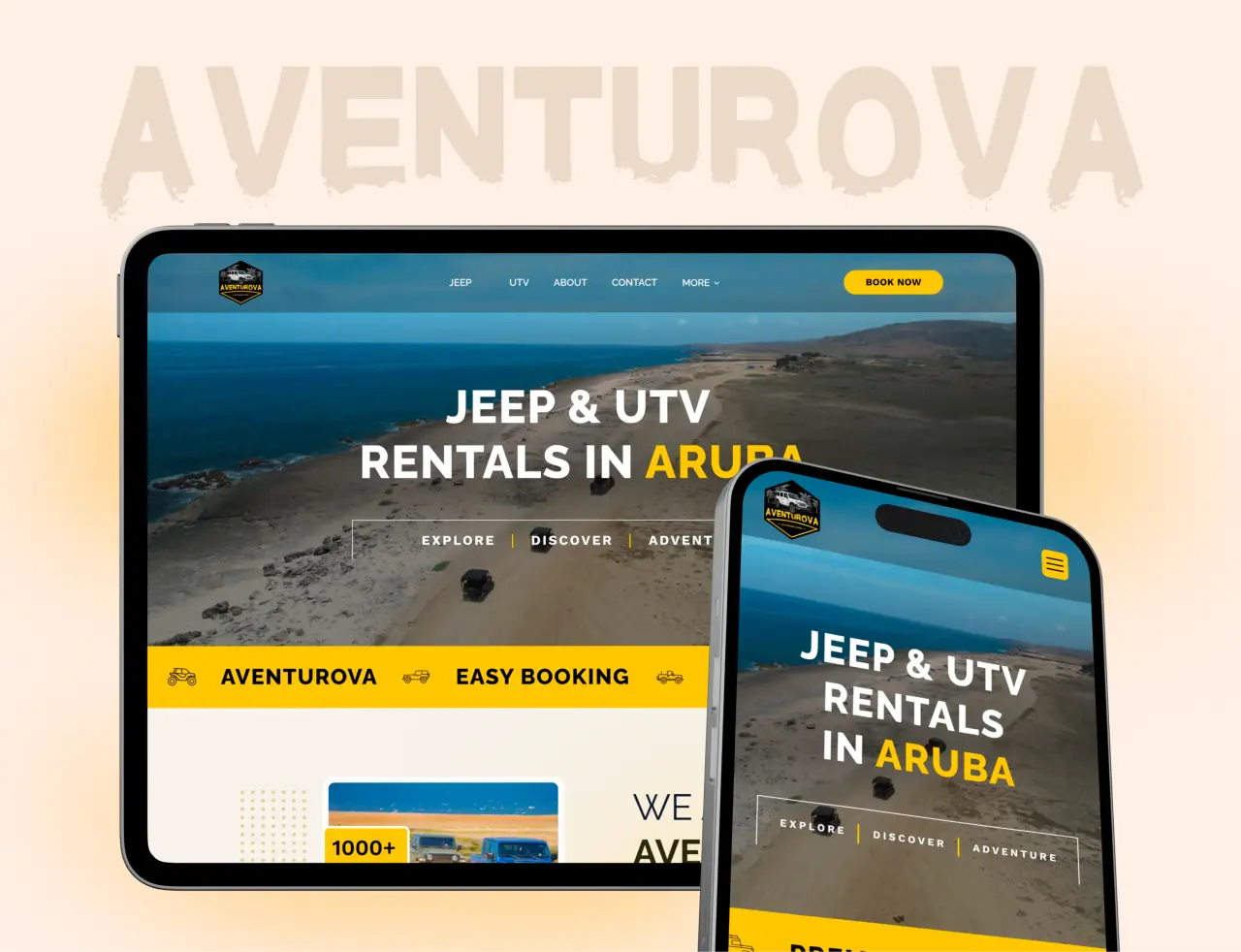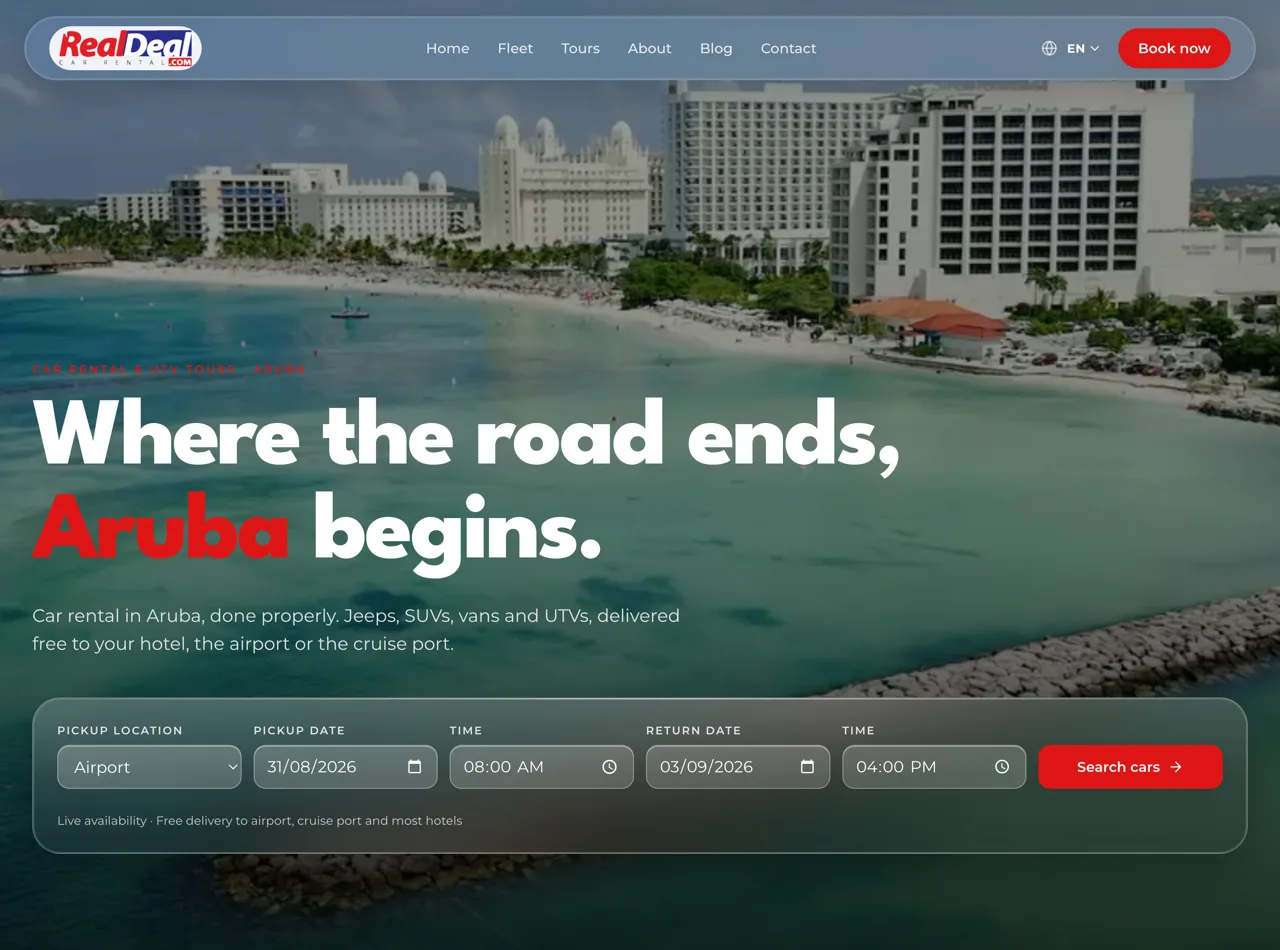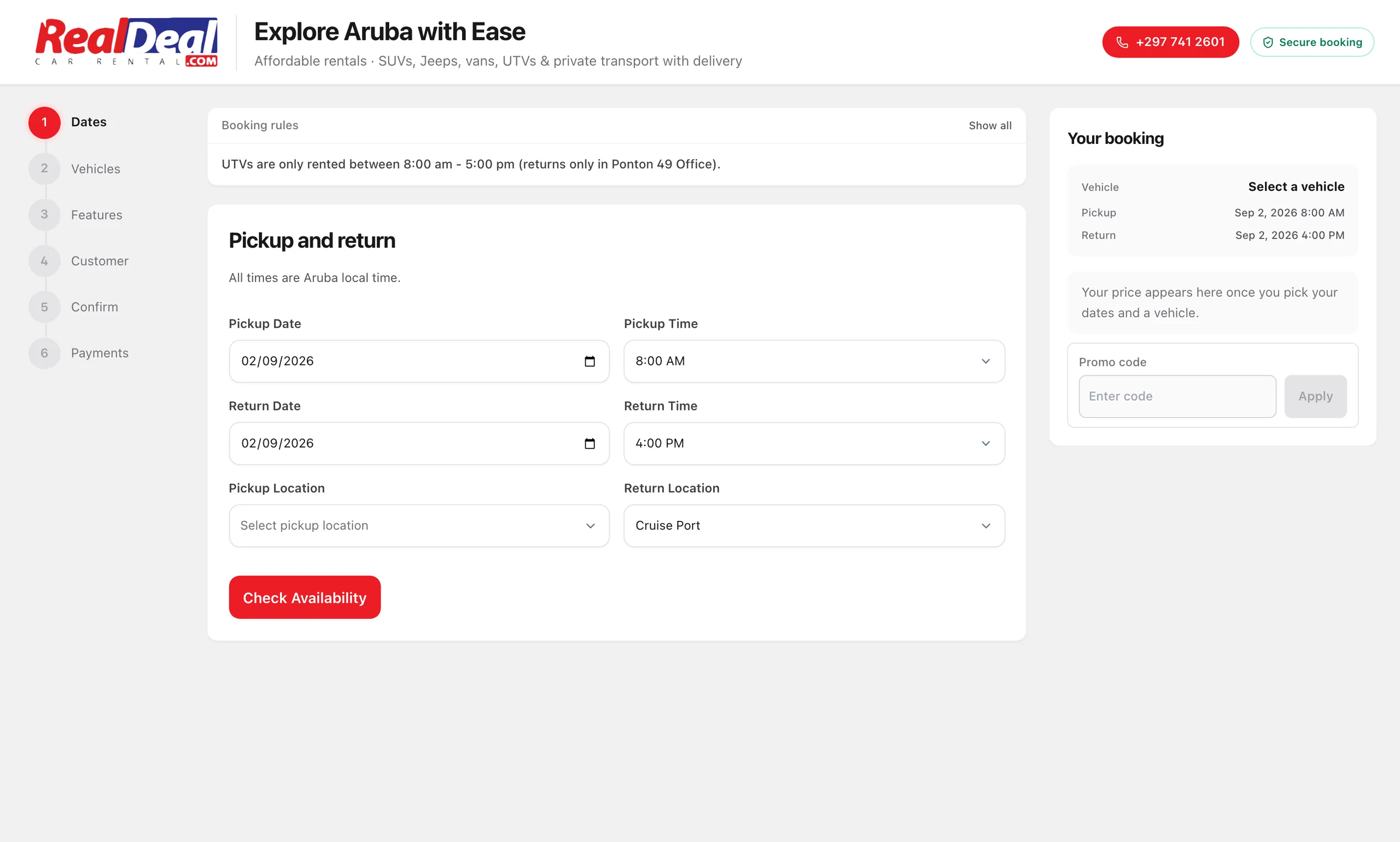





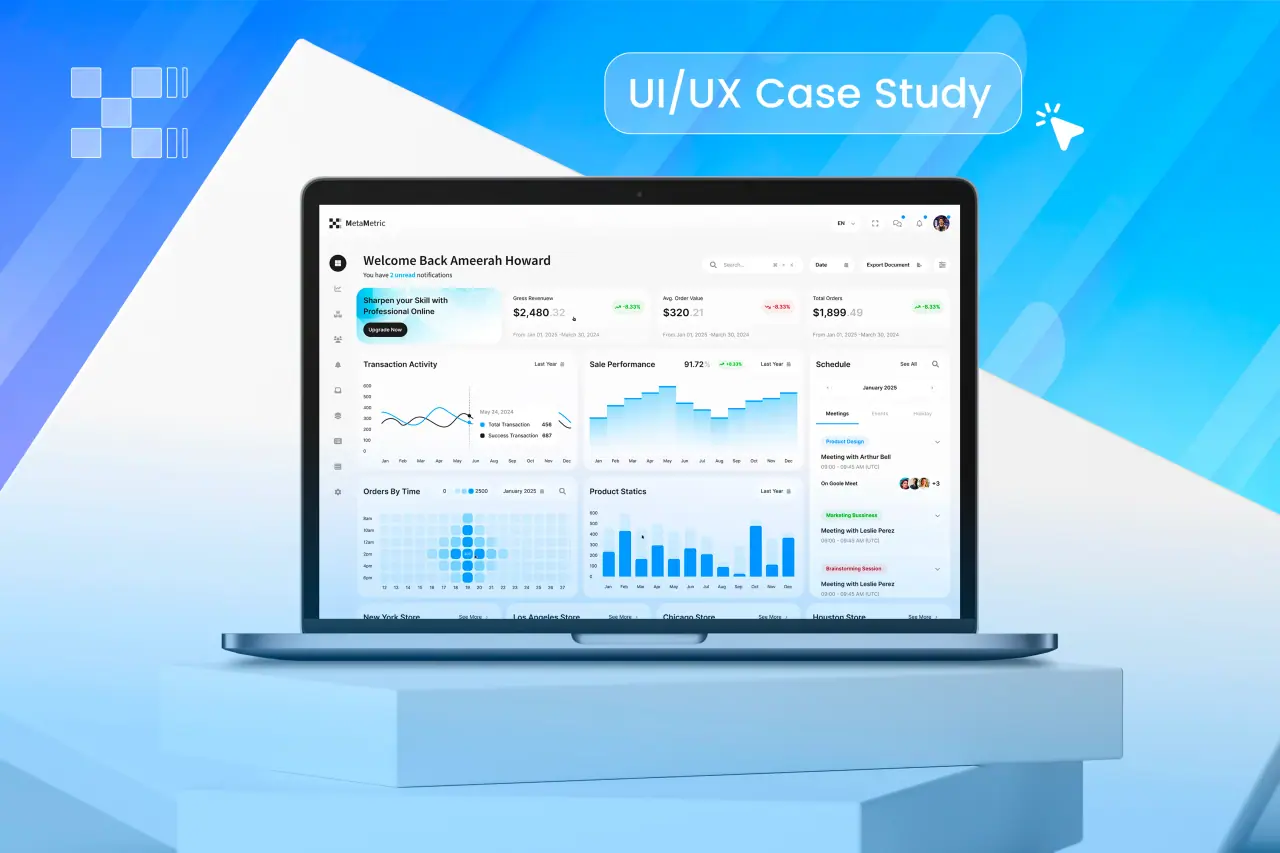
If you have asked three UI/UX design agencies for a quote, you probably have three numbers that do not look like they describe the same project. This guide explains what sits behind an agency's price in the USA in 2026, what each price band actually buys, the questions that expose a bad quote, and how a fixed price compares with hourly and retainer models.
Key takeaways
- US agencies price UI/UX work three ways: hourly, retainer, or fixed scope. Only the fixed-scope model tells you the total before work starts.
- A marketing website designed and built by one team sits around $2,000 to $5,000 at a small studio and $15,000 to $60,000 at a mid-size agency.
- A product (SaaS, portal, booking platform) starts around $7,000 at a small studio and $40,000 and up at a mid-size agency.
- The price difference is mostly overhead and hand-offs, not design quality. Ask who actually designs and builds your product.
- NeoDimensional prices design and development together: $1,999 for a 5-page site, $2,999 for 8, $4,499 for 30, custom software from $6,999, fixed in writing before work starts.
The three ways agencies price UI/UX work
Hourly billing is the oldest model. Typical US agency rates run from about $100 to $250 an hour depending on city and seniority, and a freelancer in the same market charges $50 to $150. The number looks transparent, but you only learn the total when the invoices stop, and every change request adds hours.
Retainers sell you a block of capacity each month: a dedicated designer, or a part of one, for a fixed monthly fee. They suit companies that ship continuously and already have a product team. For a company that needs one website or one product built, a retainer pays for idle weeks.
Fixed scope is the model where the agency writes down what will be delivered and what it costs before any work starts. It moves the risk of estimating onto the agency, which is why many large agencies avoid it. For a buyer it is the only model where the price on the proposal is the price on the last invoice.
- Hourly: transparent per hour, unknown in total
- Retainer: predictable monthly, pays for idle time on one-off projects
- Fixed scope: known total, requires a written scope you both sign
What each price band buys in 2026
The bands below are typical ranges for US agencies in 2026. They describe what you commonly get at each level, not what any single firm charges.
Under $2,000 usually means a template with your logo and copy, or a single landing page. Design and development are rarely both included, and the person doing the work is often a contractor you never meet.
$2,000 to $5,000 is where a small studio designs a marketing site in Figma and builds it in WordPress or React, with a CMS you can edit, on-page SEO and a launch checklist. At this level the people who scope the project should be the people who build it.
$15,000 to $60,000 is the mid-size agency band for a marketing site: a strategist, a designer, a developer and a project manager, a discovery phase, a design system and a longer timeline. The output can be excellent; the price is largely the extra people.
Product work (a SaaS app, a customer portal, a booking platform) starts around $7,000 at a small studio for a first version and $40,000 and up at a mid-size agency, with most of the cost in engineering, not pixels.
Related: our fixed website and software prices.
| Band | What you typically get | Who does the work |
|---|---|---|
| Under $2,000 | Template, landing page, often design or build only | A contractor or a theme |
| $2,000 - $5,000 | Figma design + WordPress or React build, CMS, on-page SEO | A small studio, same people scope and build |
| $15,000 - $60,000 | Discovery, design system, 4-person team, longer timeline | A mid-size agency with a project manager |
| $7,000 and up | A first product version: flows, UI, build, payments | Small studio (from $7K) or agency ($40K+) |
What is inside an agency quote
Strip any quote down and five things set the number: the number of distinct screens or page types, whether design and development are both included, who the people are and where they sit, how many review rounds are included, and what happens after launch.
Screens, not pages, drive design effort. A ten-page site with three page types is cheaper to design than a four-page site with four. A product with a dashboard, a settings area, an onboarding flow and an admin panel is at least four products.
Hand-offs cost money. When one company designs and another builds, you pay twice for the understanding, and the build usually drifts from the design. A quote from a team that does both should be cheaper and the result closer to what you approved.
After-launch terms are where quotes hide costs. Ask what counts as a defect, how long fixes are free, and what a change costs after launch. A quote without these answers is not complete.
Agency, freelancer or in-house, by cost
A freelancer is the cheapest per hour and the riskiest on continuity: one person, one skill set, one calendar. For a landing page that is fine. For a product you will need a designer and a developer who talk to each other.
An in-house hire is the most expensive way to get one website. A mid-level product designer in the US costs well over $100,000 a year with benefits, takes months to recruit, and still needs an engineer.
An agency or studio gives you the pair, the process and someone accountable for the outcome. The question is only which size of agency fits the size of your project.
Related: what our UI/UX design service includes.
| Factor | Freelancer | In-house hire | Small studio | Mid-size agency |
|---|---|---|---|---|
| Typical cost for a marketing site | $1,500 - $6,000 | Salary, every month | $2,000 - $5,000 | $15,000 - $60,000 |
| Design and build by the same team | Rarely | Two hires | Yes | Often separate teams |
| Time to start | Days | Months | Days | Weeks |
| Price fixed in writing | Sometimes | Not applicable | Yes, at the right studio | Often time and materials |
| After launch | Varies | Ongoing salary | 30 days of fixes, then quoted | Retainer |
Ten questions that expose a bad quote
Ask these on the first call. The answers tell you more than the number.
- Who exactly will design and who will build this, and will I talk to them directly?
- Is the price fixed in writing, and what is excluded?
- How many review rounds are included, and what does an extra one cost?
- What is the payment schedule, and what do I own at each stage?
- Will the code, the hosting and every account be in my name?
- What counts as a defect, and for how long are fixes free after launch?
- Can I see a product you designed and built that is live today?
- Where is the team, and what is the daily overlap with my time zone?
- What is the timeline from kick-off to launch, phase by phase?
- If I stop after the design phase, what do I walk away with?
How NeoDimensional prices design and development
We price design and development together, as one fixed number, written before work starts. A website designed in Figma and built in WordPress or React is $1,999 for up to five pages, $2,999 for up to eight and $4,499 for up to thirty. Custom software, which includes booking platforms, dashboards and portals, starts at $6,999 and is quoted in writing after a 30-minute call.
Payment is in three parts: 30% to start, 40% when you review the finished build and 30% at launch. Each of the four phases, discovery, design, build and launch, is signed off before the next begins. The code, the hosting and every account are in your name from day one, and defects in what we built are fixed free for 30 days after launch.
The person who scopes your project on the first call is the person who designs it and stays on it until launch. That is why the price is lower than a mid-size agency's for the same scope: there is no account layer, no hand-off and no second company to brief.
Related: custom software scoped and quoted in writing.
What the website packages include
Design in Figma, a WordPress or React build, responsive on phone, tablet and desktop, a contact form, on-page SEO, analytics and Search Console set up, and 30 days of fixes. The Business and Growth packages add a design system, a CMS you edit yourself, blog or content collections, motion and speed work.
What custom software includes
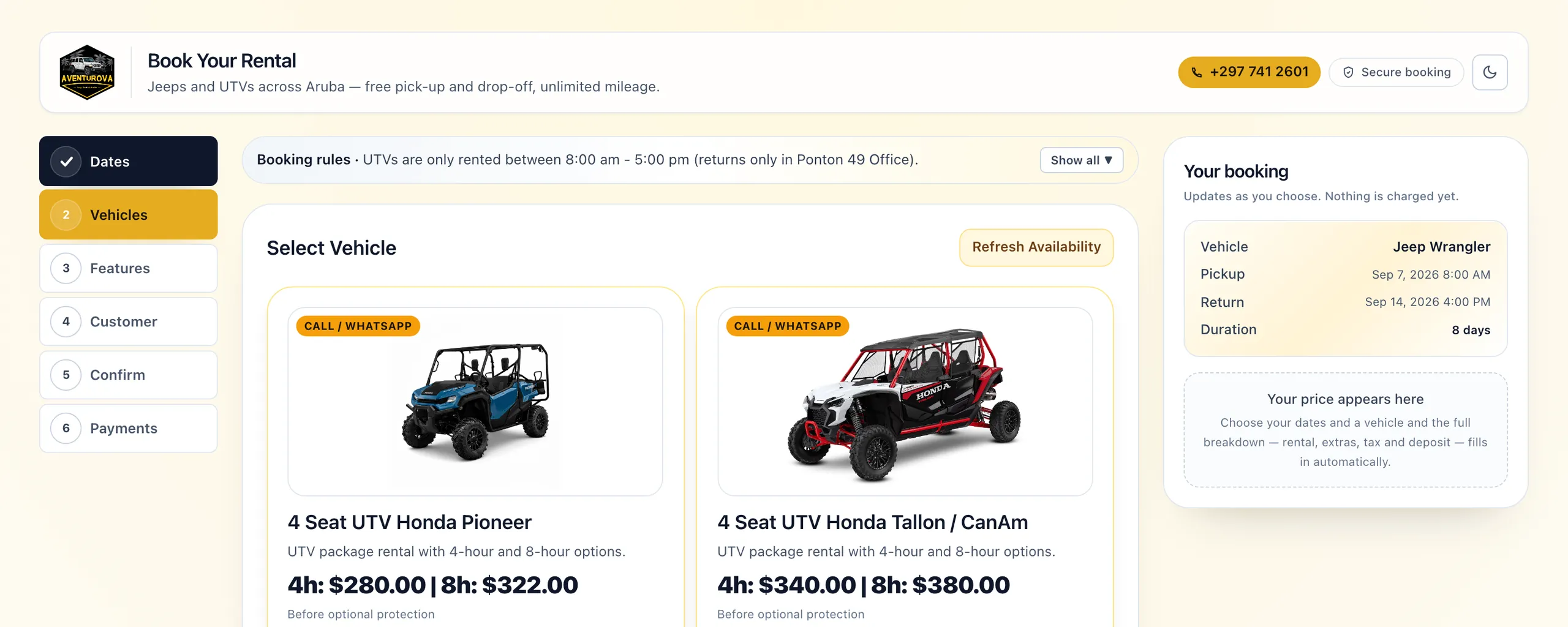
Discovery with your team, flows and high-fidelity UI in Figma, a React and Node build with the integrations you need (payments, maps, email, your existing tools), hosting set up in your accounts, and the same 30-day fix window. Two booking platforms built this way run rental companies every day.
What to do before you ask for quotes
Write one page: what the site or product has to do, who uses it, which pages or screens you can already name, and the date it needs to be live. Send the same page to every agency. Quotes against the same brief are comparable; quotes against a phone call are not.
Then ask the ten questions above and compare the written scopes, not the totals. The cheapest total with a vague scope is the most expensive quote on the table.
If you want a fixed price for a website or a product, book a 30-minute call. You will speak to the person who would design it, and you will have a written price before anyone starts.
Related: a booking platform we designed and built.